NBA Minutes Projections: Modeling Playing Time for Props
 Available in US
Justin Phan, Managing Director at Unabated, observed something fundamental about NBA props: there is a higher degree of certainty in NBA props because it is a less event-based sport. You are not betting on touchdowns or home runs. That certainty traces directly to playing time. Unlike football where a receiver might run three routes or thirty depending on game flow, an NBA starter’s minutes fall within predictable ranges. Master minutes projection and you unlock the foundation of accurate props analysis.
I spent my first two years betting props without properly weighting minutes. My analysis focused on per-game averages when it should have focused on per-minute rates. A player averaging 18 points in 32 minutes projects differently than one averaging 18 points in 28 minutes. Their per-minute scoring rates differ by 15%, which matters enormously when minutes deviate from baseline.
The Impact of Playing Time on NBA Prop Bets
The Dimers model simulates every event 10,000 times to generate prop probabilities, and minutes projection forms a core input to those simulations. Without accurate minutes estimates, even sophisticated models produce flawed outputs. The same principle applies to your analysis: get minutes wrong and everything downstream suffers.
Consider two players, each averaging 20 points per game. Player A averages 34 minutes; Player B averages 28 minutes. Per minute, Player A scores 0.59 points while Player B scores 0.71 points. If both face games where they play 30 minutes, Player A projects to 17.7 points while Player B projects to 21.3 points – a meaningful difference from identical per-game averages.
Minutes create the opportunity for counting stats to accumulate. A player cannot score from the bench, grab rebounds while sitting, or dish assists during timeouts. Every prop you bet depends on the player having enough court time to reach the line. Minutes projection is not one factor among many – it is the multiplicative factor that scales everything else.
Variance in minutes introduces variance in props outcomes. A player who averages 32 minutes but ranges from 26 to 38 depending on game flow carries more uncertainty than one who consistently plays 31-33. Understanding this distribution helps you assess the risk in any prop, especially for lines that require near-maximum performance to clear.
How to Project Playing Time
Start with recent baseline rather than season average. A player’s minutes from the last 10-15 games reflect current rotation status more accurately than full-season numbers that include periods where his role differed. Coaches adjust rotations throughout the season; your projections should track those adjustments.
Identify factors that push minutes above or below baseline. Blowout potential reduces starter minutes as coaches empty benches. Close games extend starter minutes as coaches ride their best players. Back-to-back situations sometimes see planned rest even for healthy players. Foul trouble forces unplanned bench time. Each factor adjusts your minutes projection in predictable directions.
Team depth affects minutes distribution. A team with a strong bench can afford to rest starters more liberally. A team lacking depth rides its best players harder because the alternative is worse. When projecting minutes, consider not just the player but his team’s options at his position.
Injury context reshapes minutes dramatically. When rotation players miss games, their minutes redistribute to remaining options. A backup averaging 18 minutes might jump to 28 when the starter sits. This elevation cascades through every prop – more minutes means more of everything. Conversely, a return from injury might compress minutes for players who had absorbed that playing time.
Rotation Changes and Their Impact
Coaches change rotations constantly, and these changes rarely get priced into props lines immediately. A player moving from bench to starting lineup gains 4-8 minutes overnight. A player losing his starting spot might see similar reduction. Identifying these changes before the market catches on creates value windows.
Watch for rotation signals in coach comments and beat reporter observations. Coaches telegraph changes through media availability more often than you might expect. A comment about wanting to see more of a certain player often precedes actual minutes increases. Following beat writers for teams you bet frequently pays dividends in catching these shifts early.
Rookie development arcs create predictable minutes trends. First-year players often start with limited minutes that expand as the season progresses. A rookie playing 20 minutes in November might reach 28 by March as his coach gains confidence. Betting on these players requires projecting not just current minutes but trajectory.
Trade deadline reshapes minutes across the league simultaneously. Acquiring a player at your position often means losing minutes. Being traded to a team with a clear role often means gaining them. The two weeks surrounding the deadline create volatility that props lines sometimes fail to capture fully.
Minutes and Specific Prop Types
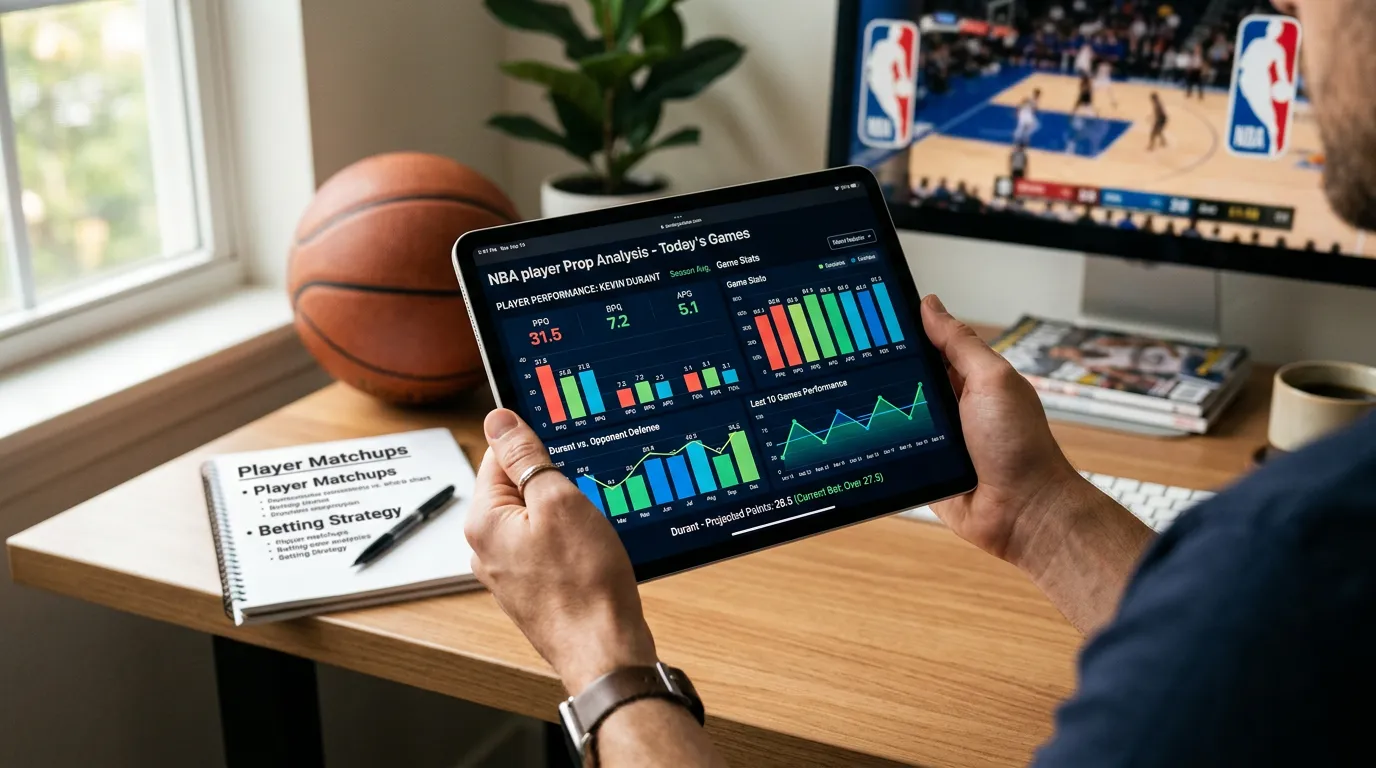
Points props correlate most directly with minutes. More court time means more shot attempts, more free throw opportunities, more chances to score. A player’s points per minute rate applied to projected minutes gives you a baseline scoring projection that forms the foundation for evaluating any points line.
Rebounds show strong minutes correlation for big men but weaker correlation for perimeter players. A centre’s rebounds accumulate steadily as he patrols the paint. A guard’s rebounds depend more on positioning and effort than pure playing time. Weight minutes more heavily for frontcourt rebounds props than backcourt ones.
Assists correlate with minutes primarily for primary ball-handlers. A point guard who runs the offence accumulates assists steadily throughout his minutes. A wing who occasionally facilitates sees less consistent assist production regardless of playing time. Know which players generate assists through role versus opportunity.
Three-pointer props depend on attempts per minute multiplied by minutes. A player averaging 6 three-point attempts in 30 minutes projects to 7 attempts in 35 minutes. Whether those extra attempts translate to made threes depends on percentage, but the opportunity increases linearly with playing time.
Minutes Projection Props FAQ
How do minutes affect player props?
Minutes create the opportunity for all counting stats to accumulate. More playing time means more chances to score, rebound, and assist. A player’s per-minute production rate multiplied by projected minutes gives baseline prop projections. Getting minutes wrong undermines all subsequent analysis regardless of other factors.
Where can I find minutes projections?
Several analytics sites publish minutes projections as part of their player props analysis. You can also calculate your own from recent games data – average the last 10-15 games, adjust for known factors like blowout potential or injury situations, and track how your projections compare to actual results over time.
How do rotation changes impact props?
Rotation changes shift minutes between players, often by 4-8 minutes per game. A player gaining the starting role sees elevated opportunities across all props. A player losing minutes sees reduced projection. Markets sometimes lag in adjusting to rotation changes, creating value windows for attentive bettors who identify shifts early.
Building Minutes Into Your Process
Every prop evaluation I conduct starts with minutes. Before analysing matchups, recent form, or situational factors, I ask: how many minutes will this player play tonight? That number anchors all subsequent analysis. A favourable matchup means nothing if the player only sees 22 minutes. An unfavourable matchup matters less if he is locked into 36.
Track your minutes projections against actual results. Over time, you will identify where your estimates systematically miss – perhaps you overestimate starter minutes in blowouts or underestimate bench player minutes when starters rest. These patterns reveal areas for improvement that directly enhance your props accuracy. Minutes projection is a skill that improves with deliberate practice and honest self-assessment.
Published by the nba Bets Props team.