
NBA Rebounds and Assists Props: Analyzing PRA Betting Markets
 Available in US
Table of Contents
- Evaluating NBA Rebounds Props Betting Markets
- Key Factors for Rebounds Props
- How NBA Assists Props Work
- Key Factors for Assists Props
- PRA Props: Points + Rebounds + Assists
- Position-Specific Betting Strategies
- Correlation Between Rebounds and Assists
- Finding Value in Rebounds and Assists Markets
- Rebounds and Assists Props FAQ
- Building Your Rebounds and Assists Edge
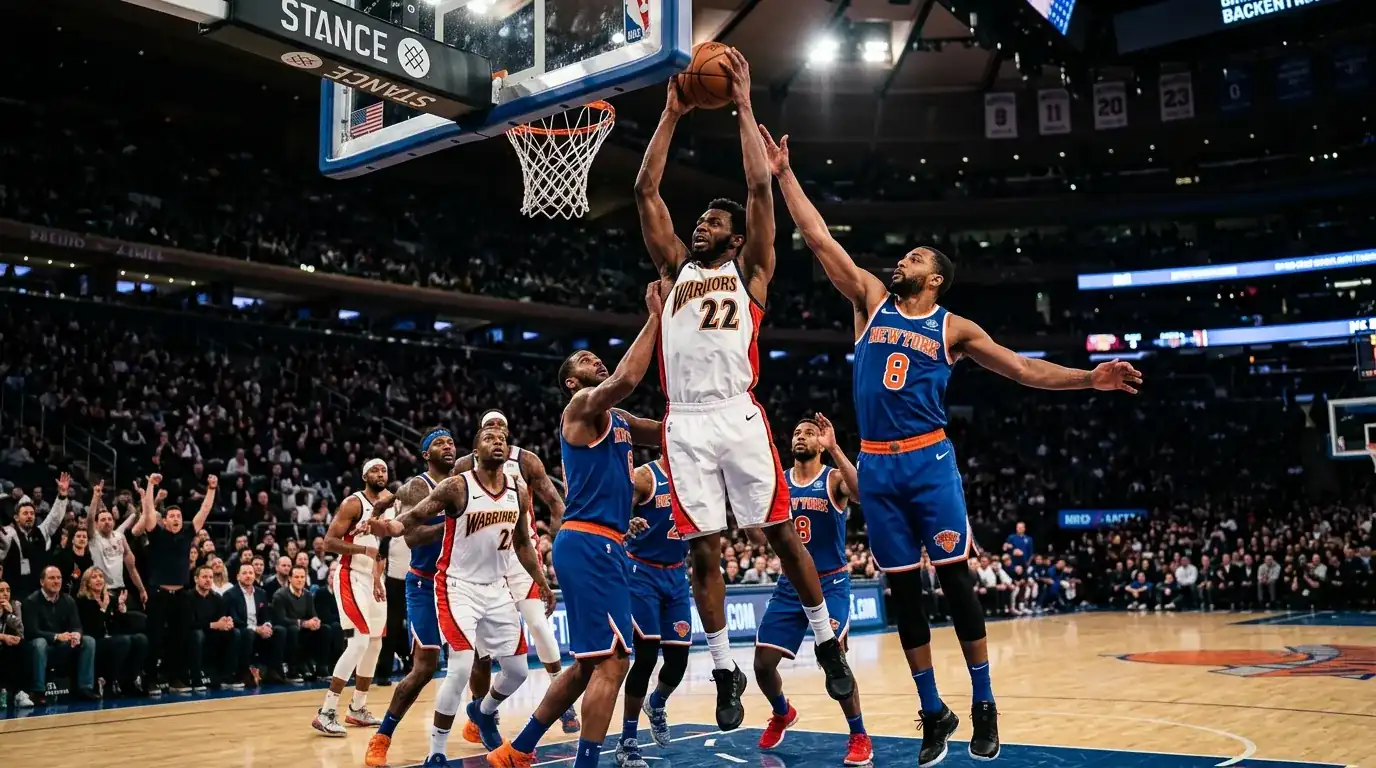
My best NBA prop bet of the 2024 season wasn’t a scoring line. It was a centre’s rebounds over in a game where his team’s starting power forward was ruled out thirty minutes before tip-off. The backup couldn’t box out, the opponent crashed the boards aggressively, and suddenly a 9.5-rebound line that looked fair became a gift. That bet crystallised something I’d been learning for years: NBA rebounds and assists props reward bettors who understand role dynamics better than those chasing flashy scoring numbers.
The prop betting market has expanded dramatically since 2018, with player props now featuring in the majority of same-game parlays. Yet rebounds and assists remain underexplored compared to points. Casual bettors gravitate toward scoring because it’s intuitive – everyone knows what 25 points looks like. Rebounds and assists require deeper knowledge of positioning, team systems, and game flow. That knowledge gap creates opportunity.
These markets behave differently than scoring props. Rebounds correlate strongly with playing time and team context – particularly who else is on the floor competing for boards. Assists depend heavily on teammate shooting and offensive system design. Both can swing dramatically based on information that casual bettors ignore: pace projections, opponent rebounding rates, and whether the game script will favour run-and-gun or grind-it-out basketball.
This guide breaks down both markets in detail, including the combined PRA (points, rebounds, assists) props that have become increasingly popular with UK sportsbooks. Whether you’re looking to add rebounds and assists to your analysis toolkit or sharpen an existing approach, the principles here will change how you evaluate these often-overlooked opportunities.
Evaluating NBA Rebounds Props Betting Markets
A rebounds prop asks whether a player will grab over or under a specified number of total rebounds. The line might be 7.5 for a starting power forward, meaning you’re betting on whether he finishes with 8 or more (over) or 7 or fewer (under). Like all props, half-points eliminate pushes – the outcome is always binary.
Sportsbooks set these lines using the same data infrastructure they apply to scoring: season averages, recent form, opponent tendencies, and projected minutes. But rebounds carry unique considerations that make them distinct from points. A player’s rebounding depends not just on his own effort and positioning, but on how many missed shots occur near him, who else on his team competes for boards, and whether the opponent features strong or weak rebounders at his position.
The split between offensive and defensive rebounds matters more than many bettors realise. Defensive rebounds are far more predictable – teams secure roughly 70-75% of available defensive boards, and the distribution among players follows relatively stable patterns. Offensive rebounds are chaos. They require hustle, positioning, and often luck. A player who averages 2 offensive rebounds per game might grab 0 or 5 on any given night with roughly equal probability.
Position shapes rebounding expectations dramatically. Centres and power forwards dominate the boards by design – they’re taller, positioned closer to the basket, and their role explicitly includes rebounding. A starting centre averaging 10 rebounds might see his line at 9.5, while a point guard averaging 4 rebounds might be lined at 3.5. The variance profiles differ too. Big men have more stable rebounding numbers because they’re always near the action. Guards’ rebounds come opportunistically – long rebounds off missed threes, or boards grabbed in transition.
UK sportsbooks typically price rebounds props with slightly wider margins than scoring lines because the market sees less volume. You might find 1.83 on both sides instead of 1.87. That extra juice means you need slightly more edge to profit, but also means the lines can be softer because fewer sharp bettors are hammering them.
Key Factors for Rebounds Props
Justin Phan, managing director at Unabated, captures the appeal perfectly: “There’s a higher degree of certainty in NBA props. It’s a less event-based sport. You’re not betting on touchdowns or big catches or home runs.” Rebounds epitomise that predictability – they accumulate gradually through a game rather than arriving in dramatic moments. But predictability doesn’t mean you can ignore context.
Opponent rebounding rate directly affects opportunities. When facing a team that crashes the offensive glass aggressively, defensive rebounding opportunities increase for everyone. Conversely, teams that run in transition and don’t prioritise offensive rebounding create fewer contested boards. Check the opponent’s offensive rebounding percentage over recent games – if they’re bottom-five in the league, expect fewer defensive rebounds for everyone on the other team.
Pace and game total projections influence rebounds through shot volume. More possessions mean more field goal attempts, which mean more missed shots, which mean more rebounds available. A game projected to go over 230 points will feature more rebounding opportunities than a defensive struggle projected for 205. The relationship isn’t perfectly linear, but it’s strong enough to matter.
Teammate absence creates the clearest rebounding edges. When a team’s primary rebounder sits out, those boards don’t disappear – they redistribute to whoever remains on the floor. A backup centre thrust into starting duty often sees his rebounding spike even if his minutes only increase modestly, simply because there’s less competition for boards from teammates. The inverse applies too: when a dominant rebounder returns from injury, role players who’d been feasting often see their numbers drop.
Blowout risk affects rebounds differently than scoring. Bench players in garbage time still need to rebound – there’s no equivalent to reducing shot attempts when protecting a lead. In fact, blowout minutes can inflate rebounding numbers for reserves who normally play limited roles. The risk cuts against starters, though. A centre pulled after 28 minutes in a blowout loses opportunities regardless of how well he was rebounding while on the floor.
How NBA Assists Props Work
An assists prop measures whether a player will dish out over or under a specified number of assists in a single game. The mechanics mirror rebounds: a line of 6.5 means you’re betting on 7 or more (over) versus 6 or fewer (under). The bookmaker sets the line, attaches odds to each side, and you choose.
Assists depend on two independent events: the pass and the made shot. A beautiful pass that leads to a missed shot generates no assist. This dependency makes assists more volatile than rebounds for most players. A point guard whose teammates shoot 50% from the field will rack up more assists than the same guard on a night when those teammates shoot 35%. The variance isn’t random – it’s systematically tied to shooting outcomes he doesn’t control.
Role determines assist expectations more dramatically than any other stat. Point guards function as primary playmakers in most systems, routinely posting assist totals that wings and big men can’t match. A starting point guard might average 8 assists while his team’s starting centre averages 2. That gap reflects job description, not ability. The centre could be an excellent passer but his role doesn’t call for regular playmaking.
Team offensive systems shape assists distribution profoundly. Motion offences that emphasise ball movement generate assists throughout the roster – everyone passes, everyone scores, everyone gets credited. Isolation-heavy offences concentrate assists in the hands of whoever initiates those isolations. A point guard in a motion system might average 9 assists with modest variance, while a point guard in an isolation system might average 7 but with huge swings based on whether his scorer finishes plays efficiently.
UK sportsbooks often list assist lines for fewer players than points or rebounds props because the market concentrates heavily on guards. You’ll find assists lines for most starting point guards and playmaking wings, but bench players and non-guard starters frequently lack assist props entirely. This concentration means the available lines face more scrutiny and may be sharper than rebounds, where softer props on role players occasionally appear.
Key Factors for Assists Props
Teammate shooting is the single most important variable that bettors consistently underweight. Live/in-play betting now represents 62.35% of online betting market share precisely because game flow changes everything – and assists exemplify why. A point guard running a pick-and-roll against a dropping big man generates open looks. Whether those looks convert into assists depends on his teammates’ shooting, not his passing.
This means checking who’s available to score matters as much as checking who’s doing the passing. If a team’s best shooter is out, the primary playmaker faces a structural headwind. His teammates will miss more shots, converting fewer of his passes into counted assists. The reverse creates opportunity: when a sniper returns from injury, the point guard feeding him often sees his assist numbers spike immediately.
Pace affects assists through possession volume, just like rebounds. More possessions mean more offensive opportunities, which mean more potential assists. But the relationship is more complex than rebounds because assists require successful shots, not just attempts. A high-pace game that’s also low-efficiency (lots of missed shots on both sides) won’t boost assists as much as a high-pace game with normal shooting percentages.
Blowout risk damages assists more than any other counting stat. When a game gets out of hand, the losing team stops running their offense and starts launching desperate shots – fewer assists. The winning team goes into clock-killing mode, running down shot clocks and avoiding unnecessary passing – fewer assists. Garbage time is where assist props go to die. Check the spread before betting any playmaker’s assists line.
Opponent turnover forcing adds another layer. Teams that pressure the ball aggressively and jump passing lanes disrupt assist opportunities. A point guard facing a top-five defence in steals will have more passes deflected and fewer clean looks to generate. Conversely, defences that play conservatively and avoid gambling allow more assisted buckets.
PRA Props: Points + Rebounds + Assists
PRA – points plus rebounds plus assists – has become one of the most popular prop markets on UK sportsbooks offering 50+ markets per NBA game. The appeal is straightforward: instead of betting on one statistical category, you’re betting on a player’s total contribution across three categories. A player with 20 points, 8 rebounds, and 6 assists has a PRA of 34.
The variance reduction argument drives much of the PRA market’s growth. If a player has a quiet scoring night, rebounds or assists might compensate. If he’s not getting assists, maybe he’s scoring more. The theory holds that combining categories smooths out single-game volatility. In practice, this is partly true – PRA numbers do show lower game-to-game variance than points alone for most all-around players. But the smoothing only works when the categories actually vary independently, which isn’t always the case.
PRA props make the most sense for genuine all-around players – those who consistently contribute across categories rather than spiking in one area. A point-forward who averages 18 points, 7 rebounds, and 6 assists has a natural PRA profile. Each category contributes meaningfully. A centre who averages 14 points, 11 rebounds, and 1 assist is essentially a rebounds and points prop masquerading as PRA – the assists contribute almost nothing.
When evaluating PRA lines, think about which category is most likely to deviate from expectation and in which direction. If a player faces a terrible rebounding team, his PRA might benefit even if his scoring is neutralised by a good perimeter defender. If his teammates can’t hit shots, his assists will lag even if everything else goes well. The combined nature of PRA doesn’t eliminate the need for matchup analysis – it multiplies it.
One warning: PRA props often carry slightly higher juice than individual category props because the sportsbook faces more uncertainty about the combined outcome. Make sure the edge you’ve identified is large enough to overcome the extra margin built into these lines.
Position-Specific Betting Strategies
The best approach to rebounds and assists props varies dramatically by position. What works for point guards fails for centres. What matters for wings might be irrelevant for power forwards. Treating all players the same is a recipe for leaving value on the table.
For centres, rebounds are the primary market. Assists lines exist but are usually too low to offer much edge – the difference between 1.5 and 2.5 assists matters less than the difference between 9.5 and 10.5 rebounds. Focus your centre analysis on rebounding matchups: opponent’s offensive rebounding rate, whether the opposing centre is a dominant rebounder who’ll compete for boards, and whether minute projections suggest any deviation from normal playing time. PRA for centres often reduces to “rebounds plus points with noise.”
Point guards flip the priority. Assists are the primary market, rebounds secondary. A point guard’s rebounds line might sit at 4.5 while his assists line sits at 7.5 – the assists line offers more surface area for analysis and more potential edge. Focus on teammate availability (who’s catching his passes and shooting), opponent defensive scheme (pressure or conservative), and pace projections. Be cautious with point guard rebounds – they’re highly variable and often depend on factors like long rebounds off missed threes that are nearly impossible to predict.
Wings require balanced analysis. A starting small forward might average 6 rebounds and 4 assists with reasonable consistency in both categories. Neither dominates his statistical profile, so you need to evaluate both matchups. Check defensive rebounding matchups for his rebounds line and offensive system factors for his assists. PRA can be particularly appealing for all-around wings because they genuinely contribute across categories rather than spiking in one.
Power forwards occupy middle ground between centres and wings. Modern stretch fours who play on the perimeter have different rebounding profiles than traditional post players. Know which type you’re betting on before analysing matchups.
Correlation Between Rebounds and Assists
Here’s something most bettors miss: rebounds and assists are negatively correlated for the vast majority of NBA players. The players who grab lots of rebounds tend to be big men positioned near the basket. The players who rack up assists tend to be guards and playmaking wings positioned on the perimeter. These are different players in different positions with different roles.
This negative correlation matters enormously for same-game parlays. If you’re building an SGP that includes multiple prop legs, combining a centre’s rebounds over with a point guard’s assists over from the same team is essentially uncorrelated – they can both hit or both miss independently. But combining a player’s rebounds over with his own assists over assumes he’ll excel in both categories simultaneously, which is harder than excelling in one.
The exceptions are the triple-double threats – players who genuinely produce at high levels across all three major categories. These all-around players show positive correlation between their own rebounds and assists because both stats rise when they’re dominating the game. When a point-forward is locked in, he’s grabbing boards, pushing transition, and finding teammates. When he’s struggling, everything lags.
For SGP construction, understanding these correlations helps you avoid bets that are harder to hit than they appear. Combining uncorrelated legs from different players is generally smarter than combining correlated legs from the same player. The same game parlay guide covers these dynamics in detail for anyone building multi-leg props.
Finding Value in Rebounds and Assists Markets
The same projection models that run 10,000 simulations per event for scoring apply to rebounds and assists – but with less market attention. That reduced attention creates inefficiency. Scoring props get hammered by every bettor who watches basketball. Rebounds and assists props see less volume, which means lines can stay soft longer.
Line shopping matters even more in these markets than for points. Sportsbooks vary their rebounding and assist lines more than scoring lines, partly because they have less confidence in their own projections. I regularly see full-point differences on rebounds props between UK operators. A player at 7.5 rebounds on one book and 8.5 on another represents an enormous edge if you’re taking the over at 7.5 or the under at 8.5.
Injury impact on teammates creates the clearest value in rebounds markets. The line-setting process often lags behind breaking news. If a team’s primary rebounder is ruled out an hour before tip-off, the remaining bigs’ rebounding lines might not adjust quickly enough. The books know the news exists, but repricing every prop on the slate takes time. That window is where edges hide.
Pace adjustments matter more for assists than rebounds. If two up-tempo teams meet in a game projected for 235 total points, assist opportunities abound. If two grinding defensive teams slog through a 195-point game, assists will be depressed across both rosters. Check whether the sportsbook’s assist lines reflect the specific pace projection or simply apply season averages without context.
For a comprehensive approach to identifying these edges systematically, including research frameworks and tracking methodologies, the complete player props guide covers the broader strategy applicable to all prop categories.
Rebounds and Assists Props FAQ
How do I combine rebounds and assists in one bet?
PRA (points, rebounds, assists) props let you bet on combined totals in a single line. Alternatively, same-game parlays allow you to combine separate rebounds and assists legs. When building SGPs, remember that rebounds and assists are generally negatively correlated for most players – high rebounders tend to be big men while high-assist players tend to be guards. Combining props from different players often makes more sense than stacking multiple categories on the same player.
Are rebounds props more consistent than points props?
For big men, yes. Centres and power forwards show lower game-to-game variance in rebounding than in scoring because rebounding opportunities are more predictable than shot-making. Guards’ rebounds are highly variable since they come opportunistically. Overall, rebounds props offer more stability for certain player types while maintaining similar volatility to scoring for others.
How does pace affect assists props?
Higher pace means more possessions, which means more offensive opportunities and more potential assists. A game projected for 235 total points will feature substantially more assist opportunities than a defensive battle projected for 205. However, pace alone isn’t sufficient – you also need efficient shooting for passes to convert into assists. High pace with poor shooting still depresses assist totals.
Should I bet rebounds props for guards?
Guard rebounds props are high-variance bets. Point guards and shooting guards grab boards opportunistically – long rebounds off missed threes, or boards in transition. Their rebounding numbers can swing wildly game-to-game with little predictability. Unless you have specific information suggesting elevated rebounding opportunity (like multiple big men missing for both teams), guard rebounds props are generally best avoided or sized very conservatively.
Building Your Rebounds and Assists Edge
Rebounds and assists props reward patient, systematic analysis over quick judgements based on season averages. The players who seem like obvious overs often have that expectation baked into their lines. The edges emerge in the details: teammate absences that redistribute boards, pace projections that expand or contract assist opportunities, and defensive matchups that favour or suppress individual rebounding.
My approach treats these markets as complementary to scoring props rather than secondary. Some nights, the rebounding lines offer better value than anything in the points market. Other nights, an assists line on a point guard facing a passive defence looks mispriced while his scoring line is sharp. Flexibility between categories – rather than tunnel vision on scoring – expands the set of available edges.
Position-specific thinking is essential. Don’t analyse a centre’s rebounds the same way you’d analyse a guard’s. Don’t expect assists volatility from a player whose role doesn’t involve primary playmaking. Match your analysis to the player’s actual statistical profile, not a generic template that treats all props equally.
The rebounds and assists markets aren’t as glamorous as scoring, but that’s precisely why they offer opportunity. Less attention means softer lines. Softer lines mean more edge for bettors willing to do the work that casual bettors skip.
Written by the editors at nba Bets Props.