NBA Player Props Odds: Line Shopping for Maximum Value
 Available in US
Table of Contents
I once watched a bettor take an NBA points over at 1.72 odds when the same line was available at 1.88 across the street. He didn’t check. That single oversight cost him roughly 9% of his potential return – money left on the table simply because he didn’t understand how to evaluate odds. Understanding NBA player props odds isn’t optional if you want to profit. It’s the foundation everything else builds upon.
UK bettors have an advantage here. We work in decimal odds by default, which makes calculations intuitive once you understand the system. American odds dominate US-based analysis and discussion – all those +150 and -120 numbers that litter forum posts and Twitter picks. Converting between systems, understanding implied probabilities, and recognising when odds represent value versus when they’re traps separates informed bettors from everyone gambling blind.
The average NBA sportsbook offers 50+ markets per game, with player props comprising the largest single category. Each of those markets carries odds that encode the bookmaker’s probability estimates plus their profit margin. Learning to decode those numbers tells you what the market thinks and, more importantly, where the market might be wrong.
This guide covers the complete landscape of NBA props odds – from basic decimal mechanics to line movement interpretation to practical comparison across UK operators. Whether you’re new to props betting or looking to sharpen your odds analysis, the principles here will change how you evaluate every line you see.
Calculating Payouts with Decimal NBA Props Odds
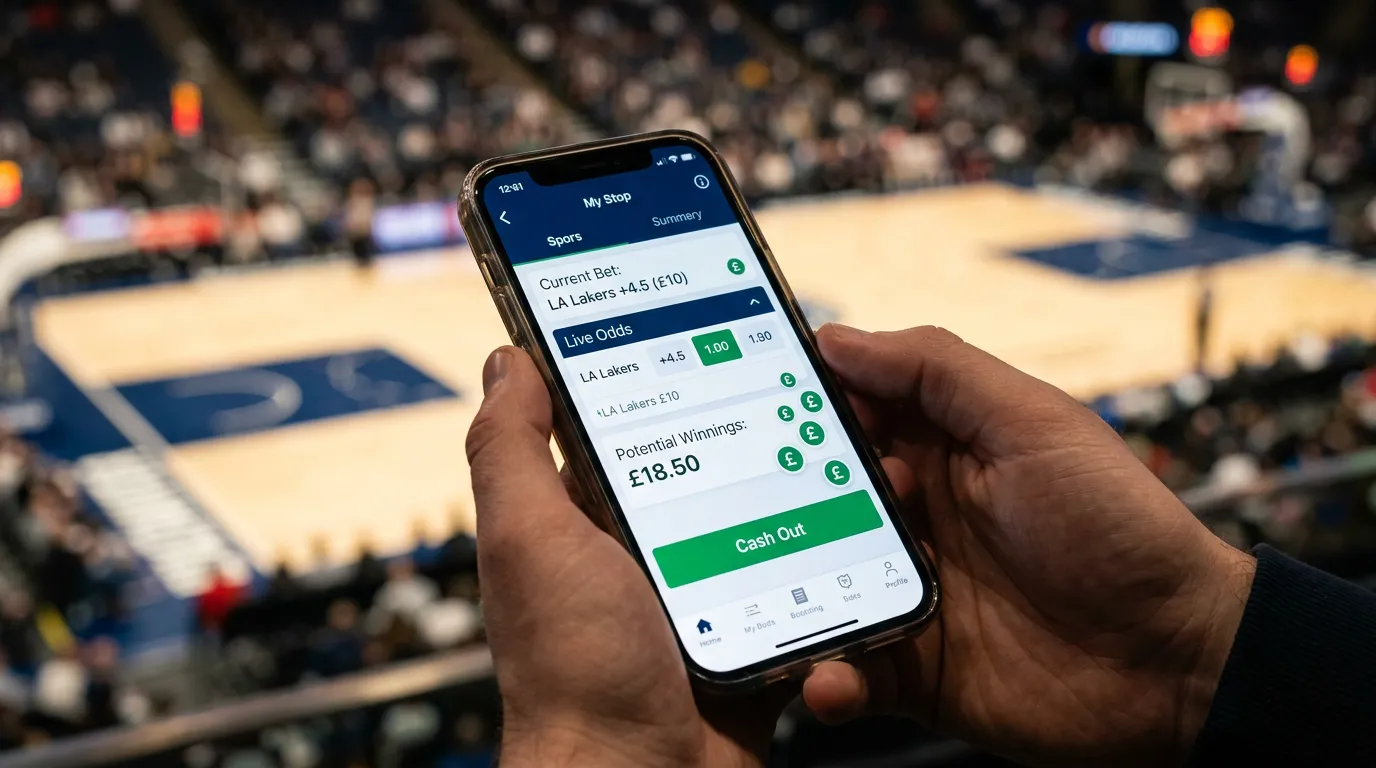
Decimal odds tell you exactly what you’ll receive back for every pound wagered, including your original stake. If a player’s points over is priced at 1.90, a £10 bet returns £19 total – your £10 stake plus £9 profit. The number represents your total return multiplier, making profit calculation straightforward: multiply your stake by the odds, subtract your stake, and you have your profit.
Props typically fall in a narrow odds range. You’ll see most lines between 1.75 and 2.10, with the majority clustered around 1.85-1.95. When odds approach 1.75, the sportsbook is telling you that outcome is more likely than its counterpart. When odds push toward 2.10, the implied probability drops and you’re being compensated for backing a less likely result.
Converting decimal odds to implied probability is essential for value assessment. The formula is simple: divide 1 by the decimal odds, then multiply by 100 to get a percentage. For odds of 1.90, the calculation is 1 ÷ 1.90 = 0.526, or 52.6% implied probability. This tells you the bookmaker believes (after margin) that this outcome occurs about 53% of the time.
Here’s where it gets practical. If you estimate that a player’s over hits 58% of the time based on your research, but the odds imply only 52.6%, you’ve identified potential value. That 5.4% gap between your estimate and the market’s represents edge – assuming your estimate is accurate. Decimal odds make this comparison transparent in ways that American odds obscure.
The decimal system’s clarity explains why UK bettors should do all their analysis in this format, even when consuming American content. Convert once, think in decimals, and your probability comparisons become automatic.
Converting American Odds to Decimal
American analysis dominates NBA props discussion. Twitter experts, betting podcasts, projection models – they all communicate in American odds. If you’re consuming that content (and you should be, since the sharpest props analysis comes from American sources), you need fluent conversion skills.
American odds come in two flavours: positive and negative. Positive odds (+150, +200) indicate underdogs – the number tells you how much profit you’d make on a £100 stake. Negative odds (-110, -130) indicate favourites – the number tells you how much you need to stake to profit £100.
The conversion formulas differ by sign. For positive American odds: decimal = (American ÷ 100) + 1. So +150 becomes (150 ÷ 100) + 1 = 2.50 decimal. For negative American odds: decimal = (100 ÷ absolute value of American) + 1. So -110 becomes (100 ÷ 110) + 1 = 1.91 decimal.
A quick reference helps until conversion becomes automatic. Standard American props odds translate as follows: -130 equals 1.77 decimal, -120 equals 1.83, -115 equals 1.87, -110 equals 1.91, -105 equals 1.95, +100 equals 2.00, +105 equals 2.05, +110 equals 2.10, +120 equals 2.20, +150 equals 2.50.
When American sources recommend a bet at “-115,” you now know to look for 1.87 or better on UK sportsbooks. When they cite “+EV at +105,” you’re hunting for 2.05 or higher. This translation bridges the gap between where the best analysis lives (American media) and where you’re placing bets (UK operators).
How Sportsbooks Set Prop Lines
Justin Phan from Unabated explains the props market’s appeal: “There’s a higher degree of certainty in NBA props. It’s a less event-based sport. You’re not betting on touchdowns or big catches or home runs.” That certainty allows sportsbooks to build sophisticated projection models – and understanding those models helps you find where they’re wrong.
Initial lines emerge from projection systems that simulate thousands of possible outcomes. The Dimers model, for instance, runs 10,000 simulations per event to generate prop probabilities. Sportsbooks use similar approaches, feeding in season statistics, recent form, matchup data, pace projections, and injury information to produce expected values for each player stat.
The projection becomes a line when the book sets a number that divides expected outcomes roughly in half. If a player’s simulated points distribution shows 50% probability of scoring 23 or more, the line opens at 22.5. Half-points exist to eliminate pushes, so books set lines just below or above round numbers based on their projections.
But opening lines are just the beginning. Once money flows, the lines adjust. Sharp bettors – professionals with proven track records – influence lines more than recreational volume. A sportsbook that sees known sharps hammering a player’s over will move the line upward even if public money favours the under. Following where sharp money lands is one of the most reliable ways to gauge where true value exists.
Books also adjust for information asymmetry. When injury news breaks, lines move immediately. When rotation changes emerge, adjustments follow. The line you see at any moment represents the book’s current best estimate given all available information – including information from the betting patterns of their sharpest customers.
Market-making for props differs from spreads in important ways. Spread markets are high-volume with massive liquidity, so books can afford tight margins and sharp prices. Props are lower-volume with less predictable betting patterns, so books build in wider margins and adjust more conservatively. This creates more opportunities for mispricing – but also means limits are lower, especially on obscure prop types.
The most important thing to understand is that lines aren’t arbitrary. They represent significant analytical effort. Beating the line consistently requires either better information, better modelling, or faster reaction to news than the sportsbook’s process. Casual opinions don’t cut it against sophisticated projection systems.
Reading Line Movement
Live betting now represents 62.35% of online betting market share, but pre-game line movement tells equally important stories. The line you see at tip-off is often different from the opening line – and understanding why reveals market intelligence worth thousands of pounds.
Movement happens for three reasons: injury news, sharp action, and public money. Injury news causes the most dramatic shifts. A star teammate ruled out reshapes a player’s expected usage, minutes, and statistical opportunities. These movements are informational – the line changes because the underlying situation changed. There’s no edge in betting into injury-driven movement; the new line simply reflects new reality.
Sharp action tells a different story. When respected bettors hit a line hard, books move it. A points prop opening at 22.5 that moves to 23.5 without any news likely reflects sharp money on the over. This movement signals that smart money believes the opening line was too low. You can either agree with the sharps (bet the over at the new higher line, accepting reduced value) or disagree (bet the under at the new higher line, fading the sharp move).
Public money moves lines too, but less efficiently. Heavy recreational betting on a popular player’s over might push his line up slightly, even if sharp money sits on the other side. Books balance their exposure while weighting sharp action more heavily. When public money and sharp money disagree, the line often moves toward the sharps while odds adjust to make the public side less attractive.
Steam moves are rapid, significant line changes that occur when multiple sharp bettors hit the same side simultaneously. A line moving from 23.5 to 25.5 in minutes signals coordinated sharp action. Steam moves often originate from new information that hasn’t fully spread through the market. If you can identify and follow steam moves quickly, you capture value before it disappears.
Understanding Juice and Vig
Sportsbooks aren’t charities. They extract profit through the vigorish (vig) or juice – the margin built into every line. Understanding vig reveals the true odds you’re betting against and the edge you need to overcome.
In a perfectly fair market, both sides of a binary prop would pay 2.00 (even money). But real lines might show 1.87 on both sides. Convert both to implied probability: 1 ÷ 1.87 = 53.5% each. Add them together: 53.5% + 53.5% = 107%. That extra 7% above 100% is the vig. The book keeps that margin regardless of which side wins.
Props typically carry higher vig than spreads or totals because they’re lower-volume markets with more uncertainty. You might see -110 on both sides of an NFL spread (4.5% vig), but -115 on both sides of an NBA prop (6-7% vig). Some props carry even wider margins, particularly on less liquid markets like steals or blocks where books have less confidence in their projections.
To calculate “true odds” – what fair market odds would be without vig – you need to remove the margin proportionally. If over and under are both at 1.87 (107% combined implied), divide each implied probability by 1.07 to remove the vig. The result: 50% true probability for each side. The 1.87 odds make a fair 50/50 proposition require you to win more than half to profit.
Vig means you need edge just to break even. At 1.87 odds, you need to win 53.5% of bets to profit. Any win rate below that loses money over time, no matter how good your analysis feels. This is why positive expected value betting – finding spots where your estimated probability exceeds implied probability by more than the vig – is the only sustainable approach.
Comparing Odds Across UK Sportsbooks
With 13.5 million monthly active online gambling accounts in the UK, competition between operators benefits bettors through odds variation. Different books price the same props differently – and exploiting those differences is free edge that requires zero additional analysis.
The major UK sportsbooks each bring distinct approaches to NBA props. Some operators build props lines from their own projections while others follow market leaders. Some carry wider vig on props to manage exposure in lower-volume markets. Others compete on price to attract action from sharper bettors. These differences create opportunities.
Bet365 offers one of the deepest NBA props menus among UK operators, with features like their 20-point early payout on moneyline bets that occasionally apply to related markets. Their lines often lead the market, meaning they post early and other books adjust to match. William Hill maintains competitive props odds with occasional promotional boosts. Betway and Paddy Power round out the major options, each with slightly different pricing tendencies.
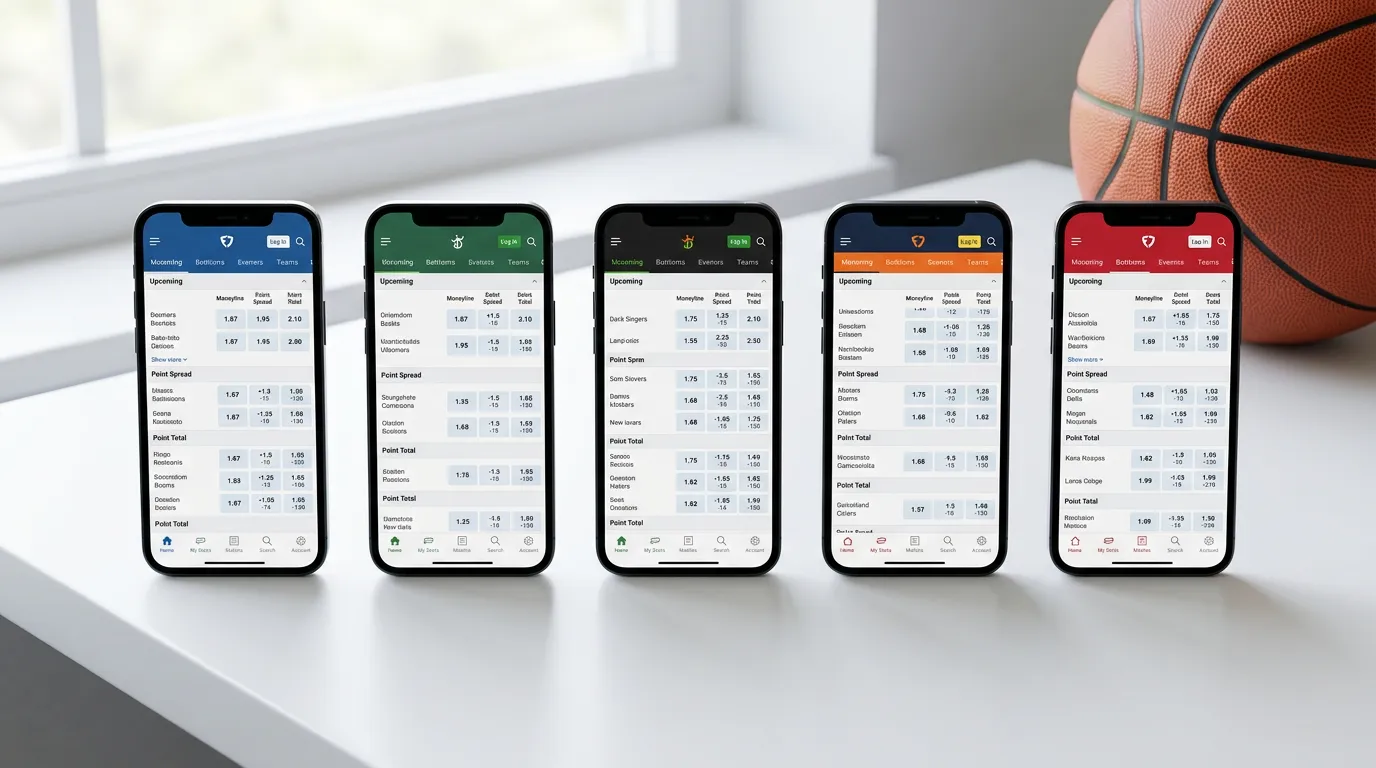
I maintain accounts at a minimum of four UK sportsbooks specifically for line shopping. The extra minute checking prices before each bet typically yields better odds on at least a third of my wagers. Over hundreds of bets, those improvements compound into meaningful profit.
Beyond the line itself, compare odds even when lines match. Two books might both offer 23.5 points, but one at 1.85 and another at 1.90. That difference equals roughly 3% additional return. It’s not glamorous, but consistent line shopping separates breakeven bettors from profitable ones.
Some operators adjust limits based on your betting history. If you consistently beat a book’s props lines, they might reduce the maximum you can wager. This is frustrating but indicates you’re doing something right. Maintaining multiple accounts ensures you can always find somewhere to place action, even if specific operators limit you.
Promotional offers occasionally skew odds favourites. Enhanced odds on specific props, insurance promotions, and boost tokens all affect effective returns. Factor these into your comparison when available, but don’t chase promotions into bad bets. A boosted line that’s still negative EV is still a losing proposition.
Identifying Soft Lines and Value
The Dimers analytics team puts it directly: “Most days, the largest betting edges our model identifies by far belong to player prop bets rather than traditional moneylines, spreads or over/unders.” Props generate soft lines because the casual betting public doesn’t analyse them seriously. Finding those soft spots is where profit lives.
News lag creates the most exploitable soft lines. When information breaks – a rotation change, a teammate’s injury, a pace-affecting strategic shift – props lines don’t adjust instantaneously. There’s a window, sometimes minutes and sometimes hours, where the line reflects outdated information. Bettors who consume information quickly can strike before adjustment.
Low-profile players often carry softer lines than stars. Sportsbooks invest more analytical resources in pricing accurately for players who attract heavy betting volume. A bench player’s props line might receive less scrutiny, leaving more room for mispricing. The trade-off is thinner limits – books accept smaller bets on less liquid props – but for most recreational bettors, limits aren’t binding constraints.
Early lines are structurally softer than closing lines. When props first post, they haven’t yet absorbed information from sharp bettors. As money flows and sharps reveal their positions, lines sharpen. Betting early captures value that disappears by tip-off – though it also means betting with less certainty about injury statuses and lineups.
Certain prop types see less betting volume and therefore less market efficiency. Rebounds and assists props, for example, draw less action than scoring lines. Defensive props like steals and blocks are even thinner. Lower volume means less sharp attention, which means more potential for mispriced lines. The books know their rebounds props might be softer than their points props, but they can’t dedicate infinite resources to every market.
Context-dependent value emerges when your analysis incorporates factors the line hasn’t fully priced. A player whose teammate just went down might see his usage spike before his props line adjusts. A centre facing a team that crashes the offensive boards might have depressed rebounding opportunities that the line doesn’t reflect. These situational factors create temporary mispricings that systematic research can identify.
The strategy guide covers systematic approaches to finding and exploiting these soft spots consistently.
Odds and Lines FAQ
What time do NBA props lines release?
Most UK sportsbooks post NBA props lines 10-14 hours before tip-off. For games starting at 1:00 AM GMT, expect lines to appear mid-morning to early afternoon UK time. Early lines contain the most value but also the most uncertainty about injuries and lineups. Lines sharpen throughout the day as information emerges and sharp money acts.
Why do prop odds vary between sportsbooks?
Different sportsbooks use different projection models, manage risk differently, and respond to betting action in distinct ways. Some lead the market with early pricing while others follow. Some shade lines based on their customer base’s tendencies. This variation creates line shopping opportunities – the same prop might be better priced at one operator than another on any given day.
What is juice on NBA props?
Juice (or vig) is the bookmaker’s built-in profit margin. On props, you typically see both sides priced around 1.85-1.90 instead of the fair value of 2.00. The combined implied probability exceeds 100%, with the excess representing the book’s margin. Props often carry higher juice than spreads because they’re lower-volume markets with more pricing uncertainty.
How do I convert American odds to decimal?
For positive American odds like +150, divide by 100 and add 1: (150/100)+1 = 2.50 decimal. For negative American odds like -110, divide 100 by the absolute value and add 1: (100/110)+1 = 1.91 decimal. Converting fluently is essential since most US-based props analysis uses American format while UK sportsbooks display decimal.
Using Odds Knowledge to Your Advantage
Every number on the screen contains information. The line tells you where the book thinks outcomes divide. The odds tell you the implied probability and built-in margin. Movement tells you how the market is reacting to new information and sharp action. Learning to read these signals transforms odds from mysterious numbers into actionable intelligence.
The practical application is straightforward. Check multiple UK sportsbooks before every bet – not just for the line, but for the odds on that line. Calculate implied probability to compare against your own estimates. Watch for movement that indicates sharp action or breaking news. Account for vig when determining whether your edge is sufficient to bet.
The complete player props guide covers how odds analysis fits into the broader framework of NBA props betting. Start there for foundational knowledge, then return here when you want to deepen your understanding of the numbers themselves.
Odds mastery won’t make you a winning bettor on its own. You still need sound analysis, disciplined bankroll management, and the patience to pass on bets that don’t offer sufficient value. But without understanding odds, you’re gambling blind – and the bettors who understand the numbers you don’t will profit at your expense.
Published by the nba Bets Props team.