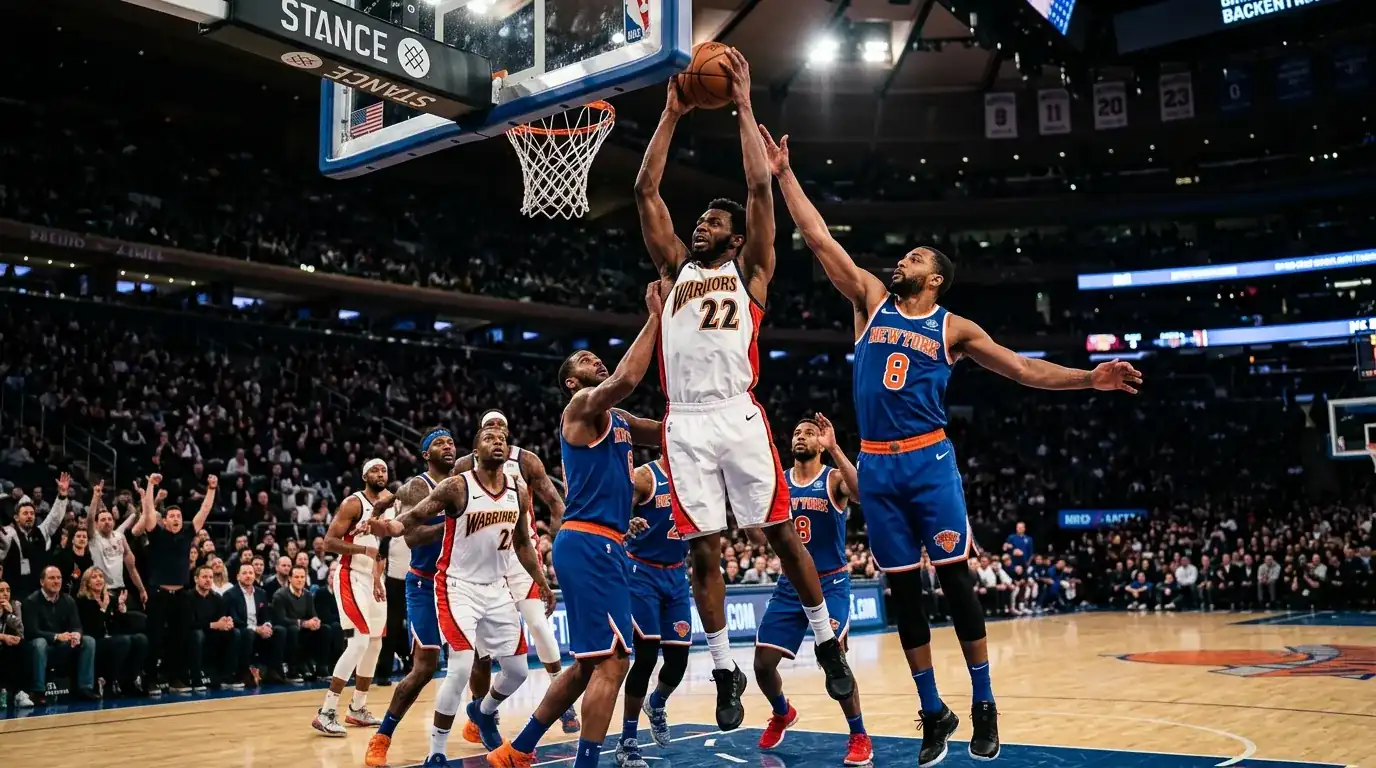
NBA Points Props: Evaluating Scoring Matchups and Lines
 Available in US

Three years ago, I placed what I thought was a slam-dunk bet on a star guard to score over 24.5 points. He was averaging 27 for the month, facing a bottom-five defence, and playing at home. He finished with 18. That loss taught me more about NBA points props than any winning streak ever could – and it’s why I’m writing this guide today.
Points props dominate the player proposition market for good reason. They’re intuitive, data-rich, and offer opportunities that spread betting simply cannot match. When an average NBA sportsbook lists 50+ markets per game, scoring lines make up the largest single category. Everyone understands points. Everyone can picture what 25 points looks like in a basketball game. That accessibility makes points props the entry point for most bettors – but accessibility doesn’t mean simplicity.
The scoring market rewards preparation over intuition. A player’s season average tells you almost nothing about tonight’s likely output. What matters is the specific context: who’s defending, how many minutes will he play, what’s the game script likely to be, and does the sportsbook know something you don’t? After nine years analysing these markets, I’ve watched UK bettors consistently leave value on the table by treating points props as basic overs and unders. They’re not. They’re probability puzzles with more moving parts than any spread or moneyline.
This guide breaks down exactly how scoring props work, what drives the lines, and where the edges actually hide. Whether you’re placing your first points bet or looking to sharpen an existing approach, the principles here will change how you evaluate every NBA scoring market you see.
While overall scoring is crucial, many bettors find significant value by specifically targeting NBA 3-pointer props markets during high-pace matchups.
Analyzing NBA Points Props Betting Markets
A points prop asks one question: will a specific player score over or under a set number? That’s the entire market distilled to its essence. The sportsbook sets a line – say, 22.5 points – and you decide which side of that number the player will land on. If you take the over at 22.5 and he scores 23 or more, you win. Score 22 or fewer, you lose. There’s no push at 22.5 because half-points don’t exist in basketball.
The mechanics feel straightforward, but the number itself contains layers of calculation you won’t see on screen. Sportsbooks build these lines from multiple data streams: season averages, rolling form over recent games, opponent defensive efficiency, projected pace, home-court factors, and any injury news affecting teammates or the opposing roster. A player averaging 25 points might see his line open at 21.5 against a top-three defence, then move to 22.5 if sharp money hits the over early.
Decimal odds on UK sportsbooks typically range from 1.80 to 1.95 on each side. A line priced at 1.87 on both over and under tells you the book has baked in its margin and considers the outcomes roughly equally likely. When you see 1.75 on the over and 2.05 on the under, the market is signalling that the over is more probable – either through sharp action, public money, or the book’s own projections.
Consider a practical example. A guard is listed at 26.5 points with the over priced at 1.85. His season average sits at 27.2, but he scored 35 and 32 in his last two games against poor defences. Tonight he faces a top-ten defensive team. The sportsbook has accounted for the matchup by keeping the line close to his average rather than inflating it based on recent performance. Your job is to decide whether 26.5 is too high, too low, or fair.
Lines typically release between 10-14 hours before tip-off, though major UK sportsbooks often post NBA props earlier in the day for evening American games. That timing matters for UK bettors – you’ll often see initial lines during your afternoon, with movement occurring through the late evening as American sharp bettors react to news.
Key Factors That Affect Player Scoring
Keech, an NBA props analyst at Unabated, put it bluntly: “I don’t want to look at situations with no news. That does not matter to me at all. Everything with the NBA is reading and reacting.” That mindset separates profitable props bettors from recreational ones. You’re not predicting what a player can do – you’re predicting what he will do in this specific context, tonight.
The factors that drive scoring output interlock in ways that season averages completely obscure. A 25-point scorer on a fast team against a slow opponent in a game projected to go under 210 total points is not the same proposition as that same player in a shootout projected for 235. Context collapses general expectations into specific probabilities.
Minutes Projection and Scoring Output
Last February, I watched a supposedly sharp bet on a forward’s over 19.5 points evaporate because his coach pulled starters with eight minutes left in a blowout. The player had 17 points in 26 minutes. Under normal circumstances, another 8-10 minutes would have pushed him past the line comfortably. Context killed the bet.
Minutes drive everything in scoring props. Modern projection models – like those running 10,000 simulations per event – weight expected playing time heavily because the correlation is nearly linear for most players. A starter averaging 32 minutes and 22 points per game produces roughly 0.69 points per minute. If you have reason to believe he’ll play 28 minutes instead of 32, you’re looking at a 3-point reduction in expected output.
Load management has transformed how minutes get distributed. Stars regularly sit the second night of back-to-backs, and when they do play, their minutes often get capped. Injury reports matter enormously – not just whether a player is listed, but what the designation means. “Probable” usually means full minutes. “Questionable” often signals a restriction. “Game-time decision” is the worst for props bettors because you’re gambling on information you don’t have.
I check three things before any points prop: the team’s injury report, the opponent’s injury report, and whether this is the first or second night of a back-to-back. Those three data points shape minutes projections more than anything else.
Defensive Matchups and Points Allowed
Not all defences are created equal, and not all defensive weaknesses apply to all scorers. A team might rank 25th in points allowed but actually defend guards well while getting torched by opposing big men. Position-specific defensive ratings tell you what the aggregate numbers can’t.
Points allowed to position data reveals exploitable patterns. A centre facing a team that ranks bottom-five in points allowed to centres over the past 15 games has a structural advantage that transcends individual ability. Conversely, a guard facing a lockdown perimeter defender might struggle to reach his average even with full minutes and normal usage.
The matchup cuts both ways. When you’re considering an under, look for elite individual defenders who might draw the primary assignment, or team schemes that funnel scorers into help defence. When considering an over, target soft matchups where the opposing team lacks the personnel to contain your player’s strengths.
Pace compounds defensive matchup effects. A fast-paced game creates more possessions, which means more shot attempts for everyone. A slow grind reduces opportunities. The best scoring situations combine favourable individual matchups with high projected pace – more chances against weaker resistance.
Home-court advantage still exists in the NBA, though its impact on individual scoring varies by player. Some shooters perform noticeably better with familiar sightlines and friendly crowds. Others show minimal splits. Checking a player’s home versus away scoring averages over his last 20-30 games can reveal whether venue matters for his specific situation. Don’t assume it does – verify it.
Blowout Risk and Reduced Minutes
The spread tells you more about points props than most bettors realise. Basketball betting’s fastest-growing segment continues to be in-play wagering, accounting for 62.35% of online betting market share – but pre-game spread analysis protects your props before tip-off even happens.
When a game is projected as a 12-point favourite versus a struggling opponent, blowout risk should dominate your thinking. Teams protecting large leads in the fourth quarter pull their starters. A player who might score 28 points in a competitive game ends up with 22 because he sat the final eight minutes. That’s not variance – it’s predictable outcome compression.
I use the spread as a blowout probability indicator. Games with spreads under 5 points are unlikely to feature extended garbage time either way. Games with spreads between 5 and 9 points carry moderate blowout risk – worth noting but not disqualifying. Spreads above 10 points should make you deeply sceptical of star player overs. The favourite’s best players won’t need full minutes to secure the win, and the underdog’s best players might get pulled early if the deficit becomes insurmountable.
Garbage time scoring complicates the picture. Sometimes bench players pad stats in blowout situations, which can save an over on a role player’s line. But for stars, garbage time almost never helps because they’re already on the bench. The asymmetry matters: blowout risk hurts star player overs but occasionally helps role player props on teams getting blown out.
The game total matters too. A projected high-scoring game (over 230) combined with a tight spread suggests both teams will keep their starters in and trading baskets. That’s prime territory for scoring props on players from both sides. A low total (under 215) with a wide spread points to a likely blowout – tread carefully.
Finding Value in Points Markets
The Dimers analytics team frames it perfectly: “Most days, the largest betting edges our model identifies by far belong to player prop bets rather than traditional moneylines, spreads or over/unders.” Points props generate more mispriced lines than any other market category because the inputs are so complex and the betting public so unsophisticated.
Value hunting starts with understanding what you’re actually betting on. You’re not betting on whether a player will hit a certain number – you’re betting on whether the price reflects the true probability. A line at 1.87 implies a 53.5% chance. If your analysis suggests the over actually hits 58% of the time, you have value regardless of whether this particular bet wins or loses.
Line shopping across UK sportsbooks transforms marginal edges into meaningful ones. With 13.5 million monthly active online gambling accounts in the UK, competition between operators keeps odds competitive, but differences persist. One book might price a player at 23.5 points while another has 24.5. That full point difference is enormous in a market where outcomes often cluster around the line. Always check multiple operators before committing – the extra minute pays for itself many times over.
The over-versus-under decision isn’t symmetrical. Public money tends to favour overs because casual bettors like rooting for big performances. This creates structural value on unders, particularly for players with high variance in their scoring distribution. A player who alternates between 30-point explosions and 15-point duds might average 22, but his scoring prop at 22.5 should be approached differently than a consistent 22-point scorer with the same line.
Recent form versus season average creates opportunities in both directions. Sportsbooks often over-adjust to short-term streaks. A player coming off three straight games above 30 points might see his line inflated to 27.5 when his true talent level and tonight’s context suggest 24 points is more likely. Conversely, a slump can deflate lines below fair value. The key is distinguishing signal from noise – is the recent form revealing something new, or is it random variance around a stable mean?
For a comprehensive framework on identifying and exploiting these edges systematically, the NBA prop betting strategy guide covers the full methodology.
Make sure to compare lines across different sportsbooks using PropShot to ensure you are getting the best possible return.
Alternate Lines: A Brief Introduction
Most UK sportsbooks now offer alternate points lines – the same player at different totals with adjusted odds. Instead of just 24.5 points at 1.87, you might see 21.5 at 1.45, 24.5 at 1.87, and 27.5 at 2.40. These options let you trade probability for payout.
Taking a lower alternate line (21.5 in this example) increases your win probability but slashes your potential return. Taking a higher line (27.5) does the opposite. The question isn’t which option is “better” – it’s which option offers value relative to its price. Sometimes the standard line is mispriced while the alternates are sharp. Other times, an alternate offers juice you can exploit.
Alternate lines work best when your analysis strongly favours one direction but you want to manage risk. If you’re confident a player scores at least 20 tonight but uncertain about 25, taking the 20.5 alternate at reduced odds might be the right trade. The deeper mechanics of alternate line strategy and optimal usage scenarios deserve their own analysis, which the detailed alternate lines guide provides.
Common Mistakes in Points Props Betting
The correlation between gambling problems and financial distress – lower credit scores, higher bankruptcy rates, increased overdraft fees – should remind every bettor that discipline matters more than any individual edge. The mistakes I’m about to describe don’t just cost money on specific bets; they compound into patterns that erode bankrolls over time.
Chasing hot streaks is the most common mistake I see. A player scores 35 three games in a row, and suddenly everyone wants his over at an inflated line. But those 35-point games happened against specific opponents in specific contexts. Tonight’s game is different. The streak might mean he’s found another gear, or it might mean regression is coming. Sportsbooks know casual bettors chase recent performance, so they adjust lines upward after hot stretches and downward after cold ones. Betting the obvious often means betting into inflated or deflated numbers.
Ignoring matchup context is nearly as costly. A player’s season average against all opponents tells you very little about tonight’s expected output against this opponent. Position-specific defensive ratings, individual defender assignments, and pace differentials all matter more than aggregate numbers. I’ve seen bettors take overs on high scorers against elite defences simply because “he averages 27.” That logic only works if tonight’s context resembles the average context – and it rarely does.
Overvaluing star players based on name recognition inflates their lines beyond fair value. The public wants to bet on stars, so sportsbooks shade their lines accordingly. Role players and second-tier scorers often offer better value precisely because casual bettors overlook them. A guard averaging 16 points whose line is set at 15.5 might offer more edge than a star averaging 27 whose line sits at 27.5.
Not checking injury reports before betting is surprisingly common. A teammate’s absence can dramatically affect a player’s expected output – either positively (more shots available) or negatively (more defensive attention, worse spacing). The opponent’s injury situation matters too. A team missing its best perimeter defender changes the calculus for every guard facing them.
Finally, betting too many props dilutes your edge. If you genuinely have an information advantage on one or two lines, concentrating your action makes sense. Spreading small bets across ten different players because “something will hit” is recreational gambling dressed up as strategy.
Points Props FAQ
How do minutes affect NBA points props?
Minutes and scoring correlate almost linearly for most players. Every minute of reduced playing time translates to roughly 0.6-0.8 fewer expected points, depending on the player’s per-minute production. Load management, blowout situations, and injury concerns all reduce minutes unpredictably. Always check for back-to-back games, injury report designations, and spread sizes that might indicate blowout risk before betting any points prop.
Should I bet overs or unders on points props?
Neither side has an inherent advantage – value depends on whether the line is mispriced relative to true probability. However, public money tends to favour overs because casual bettors enjoy rooting for big performances. This creates structural opportunities on unders, particularly for high-variance scorers and in games with blowout potential. The best approach is position-neutral: take whichever side offers value based on your analysis.
How do I account for blowout risk in points betting?
Use the pre-game spread as your primary indicator. Spreads above 10 points signal significant blowout probability, which typically reduces star player minutes and scoring opportunities. Combine spread analysis with game total projections – a wide spread with a low total almost guarantees limited minutes for starters. Consider taking unders on star players in projected blowouts, or avoid these games entirely.
What’s a good hit rate target for points props?
At standard odds around 1.87, you need to win roughly 54% of your bets to break even after the bookmaker’s margin. A sustainable long-term edge requires hitting 55-58% consistently. Any bettor claiming 60%+ hit rates over large samples should be viewed sceptically – that level of accuracy implies an edge that sportsbooks would quickly identify and correct. Focus on positive expected value rather than hit rate alone.
Maximising Your Points Props Edge
Points props reward systematic thinking over gut feelings. The players who seem like obvious overs are usually priced to reflect that obviousness. The edges hide in the gaps – where public perception diverges from likely outcomes, where recent form has distorted lines beyond fair value, where matchup and minutes data reveal something the market hasn’t fully priced.
My approach centres on three non-negotiables: check the injury reports for both teams, assess blowout risk via the spread, and compare lines across multiple UK sportsbooks before committing. Those three steps catch most of the traps that sink recreational bettors and occasionally reveal genuine value that sharper eyes have missed.
The complete NBA player props guide covers the broader market context – how points props fit alongside rebounds, assists, and combined stat markets. Start there if you’re building a comprehensive approach to NBA proposition betting. But if scoring markets are your focus, the principles in this guide will serve you well through any NBA season.
Points props will always be the most accessible NBA betting market. The question is whether you approach them as entertainment or as a genuine analytical exercise. The former is perfectly fine. The latter demands the kind of preparation that separates long-term winners from everyone else.
Created by the ”nba Bets Props” editorial team.